
Advanced Tuning Options
From the car performance experts
RELEASE THE PERFORMANCE WITH OUR ADVANCED OPTIONS

DPF Removal / Delete
Removing the DPF from a vehicle can allow a substantial increase in both performance and efficiency. We are completely dedicated to finding the correct DPF Removal solution for your vehicle. We offer a lifetime guarantee against any DPF faults, regeneration, with every DPF delete.
The Removal Procedure
Our normal procedure is to remove the internal filter from the exhaust system, leaving the outer casing in place. We can also supply and fit DPF bypass pipes for those that wish to keep the original DPF canister intact.
Once the physical filter removal has been completed the ECU is reprogrammed and any DPF related structures removed from the vehicle’s software. This will prevent the vehicle from sensing the missing filter and will prevent future DPF regeneration and DPF related warning lights. This is the most important aspect of the removal process. When carrying out this process we can also Remap the ECU for better performance and fuel efficiency.
Removing the DPF from your vehicle is not only a cost-effective solution but it also boasts the following advantages:
• Allows Increased Performance (if Remapped also)
• Increased Efficiency (MPG)
• Less Turbo Lag
• Reduced Maintenance Costs
* Our DPF Removal service is sold for off-road use only. Removal of a DPF will almost invariably make your vehicle illegal for use on a public road. This is not legal advice and if you are unsure if this applies to your vehicle, please seek legal advice.
EGR Bypass / Removal / Delete
Stringent emission targets set by the EU and other Governmental bodies have forced vehicle manufactures to develop new methods of improving the emissions of a vehicle. One such development is the EGR (Exhaust Gas Recirculation) system. Unfortunately, the manufacturers were forced to make a compromise. This was to fit an EGR valve to reduce the emissions of the vehicle, but compromise on the efficiency and reliability of the engine.
By recirculating exhaust gasses back into the combustion chamber during low engine loads the combustion temperatures are reduced and in turn reduce the NOx (Nitrogen Oxide) emissions.
Car owners are now becoming wise to the negatives of the EGR system, becoming tired of the expensive repair bills and reliability issues they cause. Therefore, we offer a full EGR bypass / removal service which results in better efficiency and less maintenance costs. Our EGR removal service boast’s the following:
- More Power
- Better Fuel Efficiency
- Improved Throttle Response
- Less Flat Spots
- Cleaner Intake System and Engine
- Reduced Maintenance Costs
- Prolonged Engine and Turbo Life
There are two aspects to the EGR Removal service.
First the EGR Valve is blanked preventing any exhaust gasses from passing through the valve and entering the intake system (
Second, the ECU is Reprogrammed and the EGR functions removed from the ECU software. This is the most important aspect of the service, and it is vital that it’s done correctly. We can also remap the vehicle for better performance and fuel efficiency at the same time.

Inlet Manifold Swirl Flap Removal / Delete
Swirl flaps are small butterfly valves located within the inlet manifold on modern diesel and petrol engines, they are designed to help regulate the fuel to air ratio, improve emissions and help generate better torque at low engine speeds. At light engine loads the flaps close, causing the air to swirl into the combustion chamber, the swirling affect aids combustion and helps to improve emissions and generate more torque. After 2000 rpm the flaps are generally activated to a fully open position and have very little effect on engine performance and emissions.
What are the problems with swirl flaps?
Major Mechanical Failure:
Some vehicles, predominantly early BMW’s were fitted with metal flaps which were prone for failure, Lots of other manufacturers including VW, Audi, Seat & Skoda for example, the flaps become loose and can enter the combustion chamber causing catastrophic engine damage.
Leaking Manifolds
Over time the seals surrounding the flap spindle brake down and cause pressurised air from the inlet manifold to leak to atmosphere. Loss of boost pressure will cause a vehicle to run rich and can damage other components.
Carbon build up:
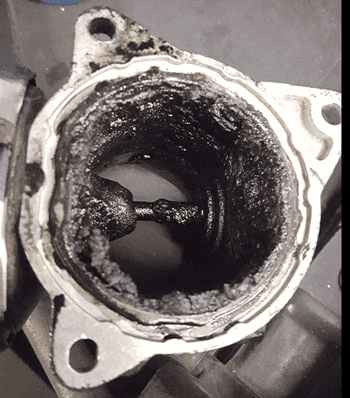
Carbon caused by EGR system problems along with oil from the breather system causes carbon to build up on the flaps, this restricts the intake manifold size and can reduce BHP, Torque and therefore performance.
How do we remove them?
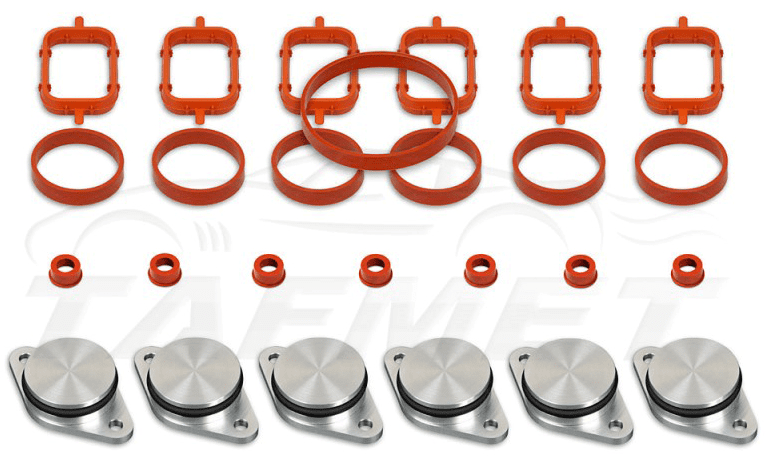
The process of removing the flaps depends on the design, in some cases the manifold is unbolted and the flaps physically removed, in other cases where the mechanical status of the flaps are good and the fault is due to an electronic actuator, the actuator function can be disabled and the flaps left in place.
What does it cost?
The cost of removal depends on the design of the manifold and flaps, contact us with your vehicle registration and we will be more than happy to offer a quotation.
Speed Limiter Removal
Many vehicles have a speed limiter set by the Vehicle Manufacturer or sometimes by a third party. The limiter is often applied as a gentleman’s agreement amongst car manufactures or by customer choice e.g.
By adjustment of the ECU settings, we are able to successfully remove the speed limiter from most vehicles. Please contact us with your vehicle details and location for further information.


DSG Tuning / Remapping
Many will argue that the DSG gearbox is one of the finest auto gearboxes available on the market today. Its ability to change gear in a fraction of a second and predict the drivers next move is a masterpiece of engineering. However, like with all OEM systems it can be restrictive, often restricting the performance of vehicles by holing back the torque available, Our custom DSG Remaps are designed to remove these restrictions and adjust the settings to compliment ECU Remaps
Our custom DSG Remapping service will alter the following parameters / options:
Increasing the torque limiter
When remapping the engine management system torque limiters are increased, however if the vehicle is equipped with a DSG gearbox the engine output will be limited by the torque limiter set in the DSG module. We raise the DSG torque limiter to match the engine torque output. Most DSG vehicles restrict the torque to 50Nm Torque more than the standard vehicle, most remaps will normally produce more torque than this so the DSG really does restrict performance.
Quicker Shift Speeds
Shift speeds can be increased by up to 30%, this reduces lag and improves acceleration. The quicker shift speeds will also give a smoother transition between gear changes and improve paddle shift response time.
RPM Limits & Shift Set Points
RPM limits and shift set points can be adjusted in drive and sports mode. Adjusting the rpm limiter as part of the engine ECU remap is not enough on a DSG equipped vehicle. The DSG ECU will determine at what rpm the gear shift takes place.
Launch Control
Launch control can be activated (model specific). Launch control will allow your car to make the perfect launch every time, reducing your 0 – 60 time and increasing the fun factor.
Full Manual Mode
Even when in manual mode stock DSG software will force the gearbox to change up or kick down etc. With our custom DSG Remap we can often give the driver full control by preventing auto-changing when in manual mode.
Pops & Bangs (Crackle Map / Over-Run Map)
This feature can be programmed into the ECU on some petrol vehicles which results in a pop and bang or crackle noise coming from the exhaust system during engine deceleration. Many manufacturers already implement such a feature from factory on some performance models. The feature offers no performance advantages but does offer a sportier noise which many drivers enjoy.

Normally during engine deceleration, the injectors are switched off to prevent fuel from entering the combustion chamber. When applying a pop and bang patch to an ECU we request the injectors to stay open for a short period of time after the throttle plate has closed. The spark timing maps are then adjusted so that the fuel is ignited substantially after TDC (Top Dead Centre). This results in fuel igniting during the exhaust stroke and creating small explosions within the exhaust system. These small explosions are what create the popping and banging noise and, in some cases, small flames can be seen exiting from the rear silencers.
Warning: This feature should only be implemented onto vehicles which have an uprated exhaust system with decat pipes or metallic structured sports catalytic converters.
Popcorn Limiter
We have seen a rise in demand for popcorn limiters on diesel vehicles. A popcorn limiter basically changes the way a diesel car behaves when the engine hits the rpm limiter. Most stock diesel vehicles will hit the pre-set rpm limiter and will stay at that exact rpm point until the driver intervenes (soft cut limiter). However, with a popcorn limiter applied the engine will bounce at the limiter in a similar way to a petrol vehicle (hard cut limiter).
The popcorn limiter has no performance advantage, it is simply a feature that can be enabled during the remap in order to change how the engine behaves and sounds when the rpm limiter is reached.
Launch Control
Launch control is designed to help the driver generate a quick launch from stand still. Too much power and the vehicle will wheel spin, too little and the engine will bog down. launch control limits the low speed rpm, thus limiting the power to the wheels, once the vehicle begins to increase in speed and traction has been established then full power is allowed.
A launch control remap is limited to a few models. Cars equipped with a DSG gearbox will require a DSG Remap in order to activate launch control. Please contact us for further information.


Rev Limit Adjustment
RPM limiters are set into place to protect the engine and drivetrain from excessive speeds, however some rev limiters are set very low and can be safely increased to expand the useable RPM range of the engine. RPM limits can be adjusted on both petrol and diesel vehicles.
Rpm limits are particularly useful on highly modified vehicle especially where the engine has been rebuilt with forged and balanced components that allow higher engine speeds
Lambda Delete / 02 OFF
When you decat (remove the catalytic converter) a petrol vehicle it is likely an engine management light will be illuminated and a fault code for cat efficiency will be stored inside the ECU memory (P0420). By careful recalibration of the engine ECU data we can disable the function of the second lambda sensor.
The second lambda sensor is used for monitoring the efficiency of the catalytic converter, by disabling the second lambda sensor it will allow a decat pipe to be used on a vehicle without triggering an engine management light or associated fault codes.

P Code / Fault Code / DTC Delete
Permanently removing fault codes from the engine management system is a very useful process when modifying a vehicle. Removing components such as swirl flaps, EGR valves, other modules etc.. for purpose of performance modification or motorsport will often cause a fault code to be stored in the ECU memory along with lights on the dash and limp mode. By recoding the ECU data and permanently removing the specific fault code we can prevent the dash lights from being displayed and prevent the vehicle from entering limp mode.
Start/Stop Disable
Start/Stop technology has been around for some time now, some people love it, others hate it. For those of you that hate it we can offer a start-stop disable service. By changing the coding inside the ECU we can fully deactivate the start/stop system. All hardware can remain in place, it will simply be electronically disabled, giving you back full control of your engine.

MAF Delete
A MAF delete is normally required on highly tuned vehicles where the sheer volume of air passing through the MAF housing causes the sensor to burn out or hit its maximum operating range. A burnt out MAF will slowly degrade engine performance, where as a MAF which has reached its maximum operating range will normally cause the vehicle to enter limp mode. Increasing the size of the MAF housing and rescaling the MAF ECU data is one option, although this is not always practically possible. By carrying out a MAF delete remap option we can disable the function of the MAF and allow the engine to run in a MAFless condition.
MAF Recalibration
We are often asked to recalibrate MAF sensors where the owner of the vehicle has fitted customised intake systems, especially where the MAF sensor itself has been replaced for a higher flow item, we are able to recalibrate the MAF in the ECU maps to allow the engine to run correctly.